

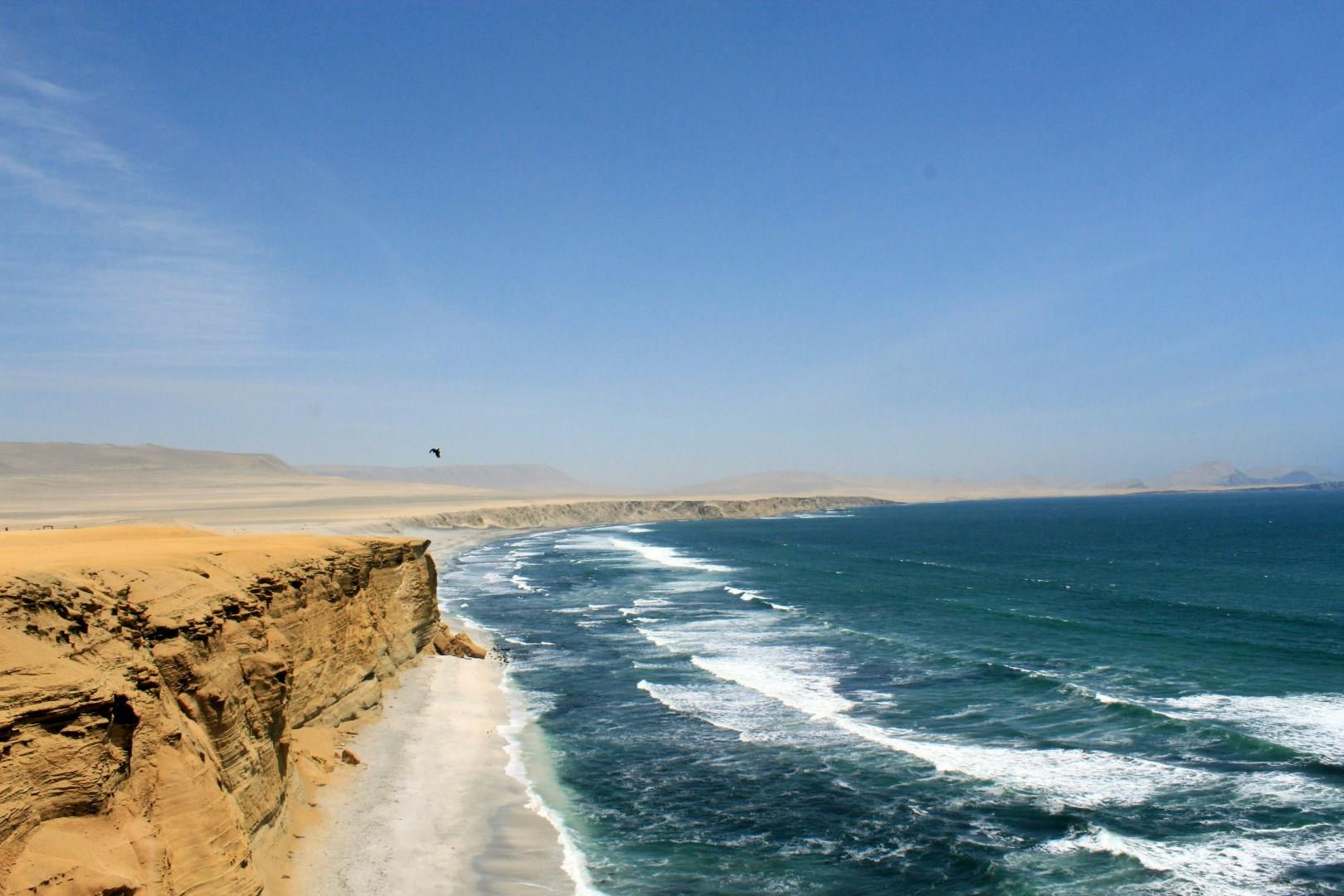
Paracas, a small coastal town in southern Peru, offers a mix of desert landscapes, marine wildlife, and ancient history. Just three hours from Lima, it’s the gateway to the Paracas National Reserve, one of the country’s most important protected areas. This reserve includes both land and sea, making it home to dramatic cliffs, wind-carved rock formations, and waters where dolphins, sea lions, and Humboldt penguins are frequently seen. One of the most photographed sites is the Cathedral, a natural rock formation once shaped like a dome until it partially collapsed in the 2007 earthquake, leaving behind jagged arches that remain striking at sunset.
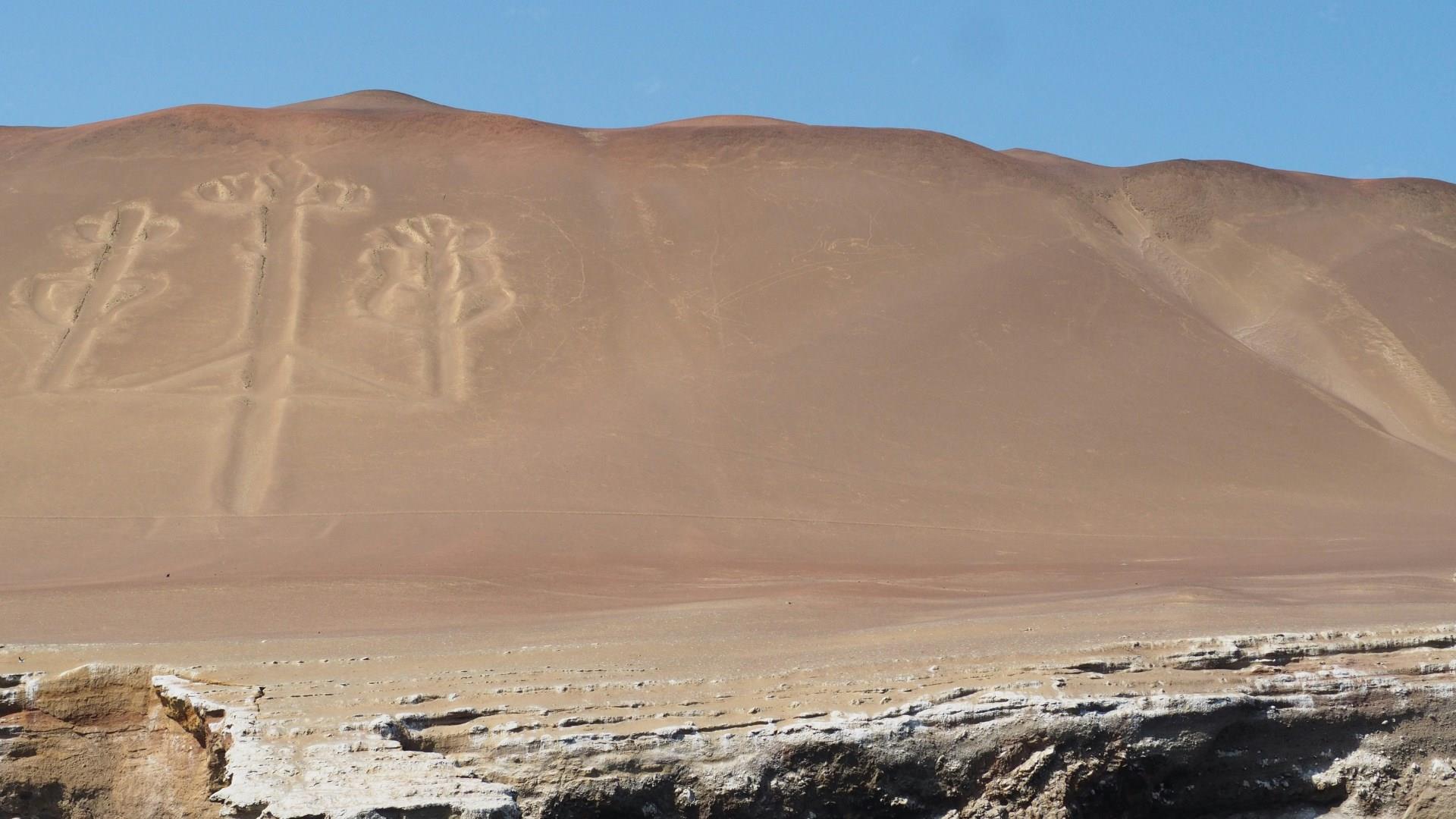
Just off the coast, the Ballestas Islands are sometimes called a miniature Galápagos. Visitors take boat tours early in the morning to see large colonies of sea lions sprawled across the rocks, thousands of seabirds in flight, and even the occasional Peruvian booby or red-footed cormorant. On the way, boats pass the Candelabra geoglyph, a mysterious 600-foot figure etched into a sand dune. Scholars still debate its origins, some theories connect it to the Nazca Lines, while others suggest it was a navigation marker for ancient sailors.
Paracas is also tied to one of Peru’s most intriguing pre-Columbian civilizations. The Paracas culture flourished in the region over 2,000 years ago and is known for its advanced knowledge of cranial surgery and fine textile weaving. Artifacts recovered from cliffside necropolises are displayed at the Julio C. Tello Museum inside the national reserve. Tello, a Peruvian archaeologist, was the first to study the area systematically.